I had a CT Scan done there today & the service that I received was excellent.
Linda Williams
 Google review

Specialized imaging
Coronary Calcium Measurement | Heart Risk Assessment
Best Price Guarantee 4.9
Patient stories
Real patient stories from Advantis MRI & Diagnostic Imaging.
4.9 / 5from 1,000+ reviewsI had a CT Scan done there today & the service that I received was excellent.
Google reviewThe front desk was helpful. The CT and X-ray Technicians were gentle.
Google reviewstaff was really nice and they provided me with all the information through telephone.
Google reviewI've had 3 MRI's, one CT scan and one X-ray from this fine group. Very efficient and extremely friendly.
Google reviewThe staff is Amazing especially the MRI Tech she was patient and helpful due to my anxiety.
Google reviewGreat customer service and gave me really good comfort while getting my MRI. I will recommend coming here for services.
Google reviewUnderstand the examination
A coronary calcium scan uses CT to measure calcified plaque in the heart's arteries. It can help inform a risk assessment in selected patients. A score does not describe every type of plaque or replace evaluation of symptoms.
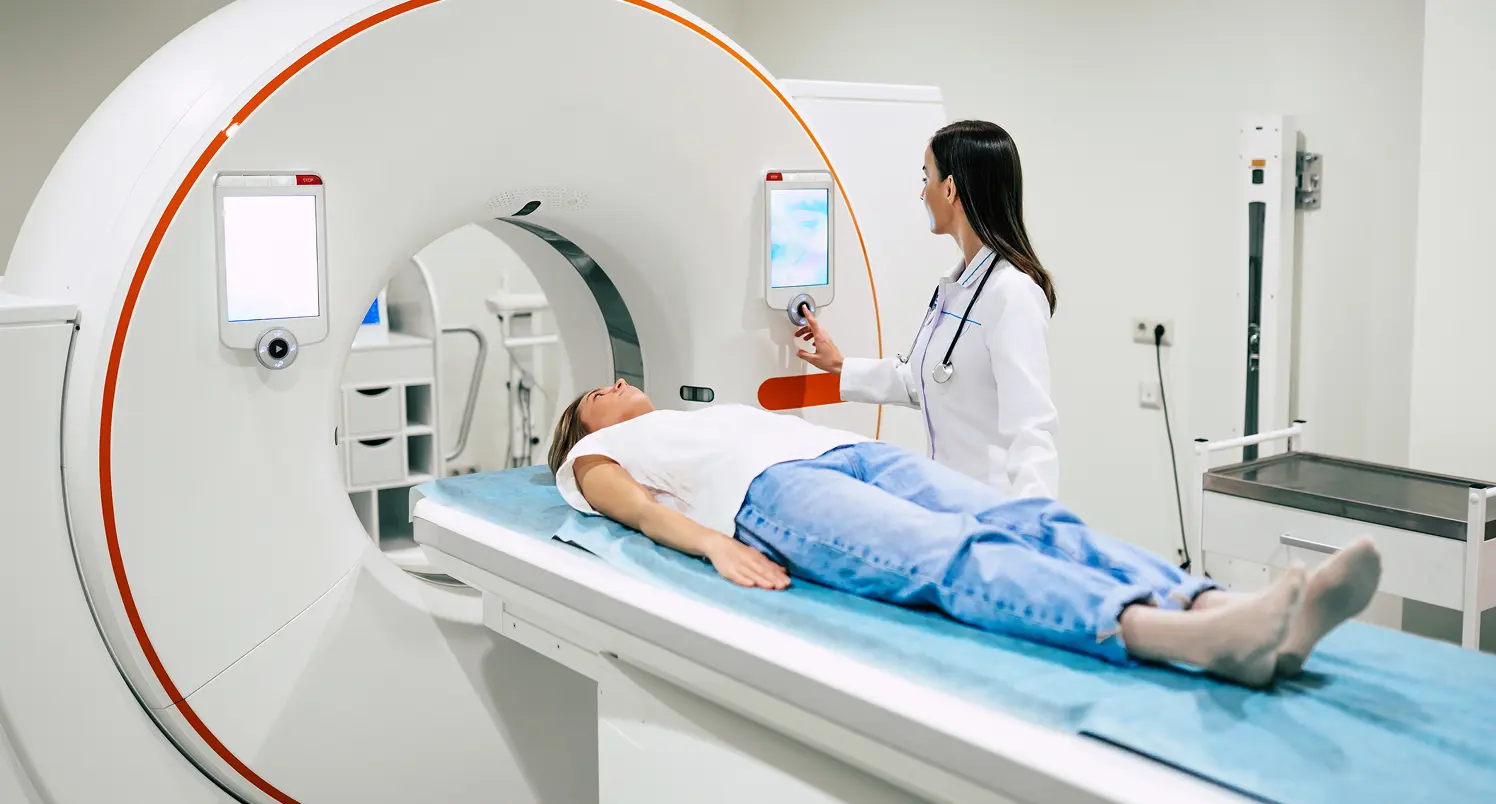
A coronary calcium scan detects and quantifies calcified plaque in the arteries supplying the heart. The result is commonly expressed as an Agatston score, which describes the amount of detectable calcium rather than a percentage of artery blockage. The test usually does not require intravenous contrast. It can add information about coronary atherosclerosis, but it does not show every type of plaque or replace all other heart examinations. A score of zero means that this scan did not detect coronary calcium; it is not a promise that all coronary disease is absent. The value of the result depends on the clinical question being asked.
Calcium testing is most helpful when additional risk information could change a prevention plan. The American Heart Association describes its role in decisions such as whether cholesterol-lowering treatment may be useful when the next step is uncertain. A test adds less value when the treatment decision is already clear, and it is not a general screening requirement for everyone. Before testing, discuss the decision the result could change. Afterward, review it with the clinician who knows your blood pressure, cholesterol, smoking history and other risk factors. The aim is an understandable prevention plan rather than a number without a follow-up discussion.
Different heart tests examine different aspects of cardiovascular health. Calcium scoring looks for calcified coronary plaque. Coronary CT angiography uses contrast to examine the coronary arteries in greater anatomical detail. Other tests may assess electrical activity, pumping function or the response to physical or medication-induced stress. These examinations are not automatically interchangeable, and the most detailed image is not necessarily the most appropriate first test. Your clinician chooses among them using symptoms, examination findings and the problem that needs clarification. If new chest symptoms develop, do not rely on an old screening result to determine their importance; symptoms require their own clinical assessment.
Assessment of possible coronary heart disease starts with the clinical situation. A clinician may review symptoms, family history, risk factors and examination findings, then choose tests that address the remaining uncertainty. Some tests examine electrical activity or the response to exercise; others examine anatomy or how the heart functions. A calcium score does not supply all of that information. This is why a person with symptoms and a person discussing prevention may receive different recommendations even if they are the same age. When a test is proposed, ask whether the goal is to estimate future risk, investigate a current symptom or guide treatment for known disease. That purpose provides the context needed to interpret the eventual result.
A scan result is only one input into cardiovascular prevention. The American Heart Association’s Life’s Essential 8 framework also addresses blood pressure, blood lipids, blood glucose, weight, diet, activity, nicotine exposure and sleep. These factors remain relevant whether a calcium score is low or high. At follow-up, identify which measures need attention and which practical changes are appropriate for your circumstances. A useful plan may include targets discussed with your clinician, support for behavior change and a way to review progress. Avoid treating the score as a personal pass-or-fail grade. Its purpose is to inform decisions, while the prevention plan addresses the factors that can be monitored or changed over time.
Screening is designed for a particular context and cannot provide advance clearance for every future symptom. When the clinical situation changes, the appropriate test may change as well. If symptoms arise after a calcium scan, tell the evaluating clinician when the scan was performed and what it measured. A previous result can be part of the history, but the current assessment should address the current concern rather than rely on the name of an earlier test.
| Focus | What the study can add | What to keep in mind |
|---|---|---|
| Coronary calcium | A calcium score measures calcified plaque visible in the coronary arteries. | It does not measure every type of plaque. |
| Risk discussion | A clinician may use the result with other cardiovascular risk factors. | The score alone does not define an individual treatment plan. |
| Different cardiac tests | Calcium scoring differs from coronary CT angiography. | It is not a substitute for urgent assessment of new chest symptoms. |
A doctor’s order is required before your scan. Confirm the order says calcium scoring, rather than coronary CT angiography. Ask scheduling about availability, visit length, preparation and a written estimate. Coverage may depend on your plan and the reason for the study.
The team prepares the ordered study and explains positioning, any contrast steps and instructions during imaging. Ask about the full visit window beforehand, particularly when oral preparation is involved.
Your radiologist’s report goes to the ordering clinician, who will explain the findings and next steps. Contact our records team for copies of your images or report.
Request images and reportsRequest an estimate for the examination on your referral, including contrast and radiologist interpretation. Confirm your plan’s network status and authorization requirements.
Costs, insurance & financingCall with your referral and preferred location to confirm where your examination is available.
View locations & hoursCommon questions
Do not use a screening appointment to assess urgent symptoms. If you think you may be having a medical emergency, call 911.
Call 877-345-4244 with your order or request a callback. The team confirms the requested protocol, appropriate center and appointment options. A callback request does not itself confirm a booking.
Ask for a current quote for the exact study, including any contrast and the radiologist’s interpretation. Confirm separate charges and payment terms. If using insurance, check your plan’s network, benefits and authorization requirements.
Read each requested study to scheduling. Ask whether separate appointments or estimates are needed and whether any preparation instructions conflict. The office can obtain clarification from the referring clinician when necessary.
Ask which earlier images and reports are useful and how to transfer them. An existing scan may help comparison, but the clinical team determines whether it answers the current question or meets any specialized analysis requirements.
Arrange the report discussion with the clinician who ordered the examination or manages your care. Ask how the report will reach that office and when follow-up is appropriate. Records staff can help arrange copies for another provider.
No. It measures detectable calcified plaque burden, not the percentage narrowing inside a particular artery. Two reports can therefore answer different questions even when both involve the heart. Ask your clinician what the score means for future risk and whether any additional assessment is appropriate. Do not convert an Agatston number into a percentage of blockage or use it to diagnose the cause of chest symptoms.
No. Its usefulness depends on whether it would help resolve an uncertain treatment decision. People with very low risk, established coronary disease or an already clear management plan may not gain useful new information from it. The test also uses X-rays. Discuss the likely benefit, the limitations and what you would do differently after a low or high result before deciding to proceed.
The tests investigate different questions. A clinician assessing symptoms or suspected coronary disease may need information that a calcium score does not provide. Ask what uncertainty the proposed test addresses and how the result could affect your care. The appropriate choice depends on the clinical situation, not simply on which test sounds more detailed.
Yes. Cardiovascular health involves several factors beyond detectable coronary calcium, including blood pressure, cholesterol, smoking exposure, activity and sleep. A reassuring score is not a reason to abandon an agreed prevention plan. Discuss which factors are relevant to you and how to monitor them, rather than using one imaging result as a complete measure of heart health.
Yes. Advantis requires a doctor’s order for every scan, including self-pay appointments. You can request a callback before you have the order; it must be available before the examination.
Have your referral ready. Our team will confirm your scan, location and available appointment times.
The patient guide
Bone & heart health
Learn what a coronary calcium score measures, what a zero result cannot promise and how to prepare for the follow-up discussion.

Screening decisions
Screening is a decision about a specific test and a specific risk profile, not a single scan for everyone.
