I had a CT Scan done there today & the service that I received was excellent.
Linda Williams
 Google review
Specialized imaging
Detailed Artery Imaging | Board-Certified Radiologists
Best Price Guarantee 4.9
Patient stories
Real patient stories from Advantis MRI & Diagnostic Imaging.
4.9 / 5from 1,000+ reviewsI had a CT Scan done there today & the service that I received was excellent.
Google reviewThe front desk was helpful. The CT and X-ray Technicians were gentle.
Google reviewstaff was really nice and they provided me with all the information through telephone.
Google reviewI've had 3 MRI's, one CT scan and one X-ray from this fine group. Very efficient and extremely friendly.
Google reviewThe staff is Amazing especially the MRI Tech she was patient and helpful due to my anxiety.
Google reviewGreat customer service and gave me really good comfort while getting my MRI. I will recommend coming here for services.
Google reviewUnderstand the examination
CT angiography combines CT imaging with intravenous contrast to examine blood vessels. Clinicians may use it to investigate narrowing, an aneurysm or other vascular concerns. It uses ionizing radiation and differs from catheter angiography.
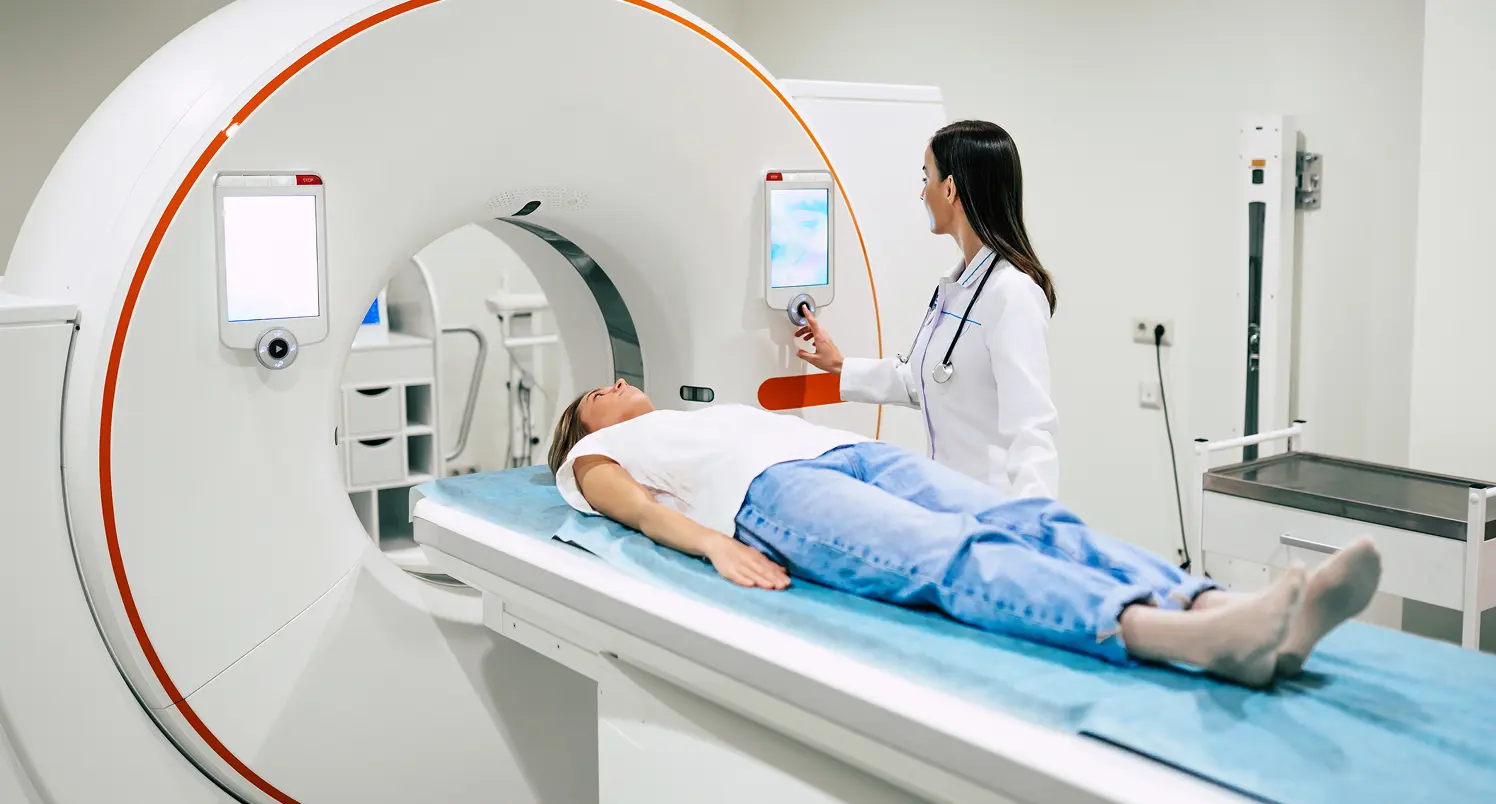
CT angiography uses CT images acquired while injected contrast is passing through the blood vessels of interest. The timing is part of the examination, not simply an optional addition to any CT. A CTA may help investigate vessel narrowing, an aneurysm, a clot or a vascular injury, depending on the territory requested. A routine CT obtained for a different purpose may not answer the same question. The referral should identify the body area and clinical concern so the radiologist can select a suitable approach. The result then needs interpretation in the context of symptoms and any previous vascular imaging or treatment.
A coronary CTA is specifically designed to assess the arteries supplying the heart. Because these vessels move with the heartbeat, the examination may involve heart-rate assessment and medications selected by the clinical team. It should not be assumed that the instructions for a head, neck or limb CTA also apply to a coronary study. Nor is a coronary CTA the same test as a noncontrast coronary calcium score. Before following general online instructions, clarify the exact examination name and the purpose of any prescribed preparation. This page explains the distinction; it does not confirm that every type of coronary or vascular protocol is offered at every location.
The contrast used for a CT angiogram is generally iodine-based and given through an intravenous line. It makes the vessels easier to distinguish during imaging, but it also introduces considerations beyond the scan itself. The clinical team needs to know about prior contrast reactions and relevant kidney problems. A previous reaction should be described by the symptoms and the agent, if known, because a vague allergy label may not tell the team what occurred. Follow the preparation given for your own examination rather than changing medication or restricting fluids independently. During administration, tell the technologist promptly about discomfort or symptoms that concern you.
When symptoms suggest peripheral artery disease, the clinical assessment may include an examination and measures such as the ankle-brachial index, which compares blood pressure at the ankle and arm. Imaging can then provide additional information about the vessels when needed. This distinction matters because an anatomical picture and a measurement of circulation do not answer exactly the same question. CTA may help define where narrowing occurs or assist treatment planning, but its role should be explained in relation to symptoms and other findings. Ask whether the scan is intended to confirm a concern, map its extent or prepare for an intervention. A vessel image is most useful when the result connects to a specific decision in the overall evaluation.
CT combines measurements taken around the body to create cross-sectional images. The selected area, contrast timing and image reconstruction determine which structures are assessed in detail. Movement can reduce image clarity, which is why the technologist may ask you to stay still or briefly hold your breath. Metallic objects can also affect the pictures. Explain if pain or another limitation makes the instructions difficult rather than trying to force an uncomfortable position without telling the team. When a report mentions artifact or limited assessment, it is describing an image-quality issue that may restrict interpretation. Ask whether the study still answered the main question and whether the limitation changes the recommended next step.
If you previously reacted to contrast, explain the symptoms, their timing and the type of examination if known. A warm feeling during an injection is different from a prior reaction that required medical treatment, and the team needs that detail when planning the study. Do not start a medication regimen copied from another patient’s instructions. The appropriate approach depends on the history and the proposed agent, and may require discussion before the examination.
| Focus | What the study can add | What to keep in mind |
|---|---|---|
| Vascular anatomy | CT angiography evaluates blood vessels in the requested region. | It has a different purpose from some routine CT examinations. |
| Timed contrast imaging | Injected contrast is used with a protocol designed to show the vessels. | Previous contrast reactions and relevant kidney history need review. |
| Coverage | The order specifies the vascular territory to investigate. | Confirm the exact study rather than requesting a general angiogram. |
A doctor’s order is required before your scan. Discuss kidney conditions, pregnancy and any previous iodinated contrast reaction before your appointment. Ask about fasting and whether laboratory results are needed. Your appointment instructions should match the exact CTA examination.
The team prepares the ordered study and explains positioning, any contrast steps and instructions during imaging. Ask about the full visit window beforehand, particularly when oral preparation is involved.
Your radiologist’s report goes to the ordering clinician, who will explain the findings and next steps. Contact our records team for copies of your images or report.
Request images and reportsRequest an estimate for the examination on your referral, including contrast and radiologist interpretation. Confirm your plan’s network status and authorization requirements.
Costs, insurance & financingCall with your referral and preferred location to confirm where your examination is available.
View locations & hoursCommon questions
No. A calcium score evaluates calcified coronary plaque, usually without injected contrast. CTA uses contrast to visualize vessels. Confirm the exact examination on your order.
Call 877-345-4244 with your order or request a callback. The team confirms the requested protocol, appropriate center and appointment options. A callback request does not itself confirm a booking.
Ask for a current quote for the exact study, including any contrast and the radiologist’s interpretation. Confirm separate charges and payment terms. If using insurance, check your plan’s network, benefits and authorization requirements.
Read each requested study to scheduling. Ask whether separate appointments or estimates are needed and whether any preparation instructions conflict. The office can obtain clarification from the referring clinician when necessary.
Ask which earlier images and reports are useful and how to transfer them. An existing scan may help comparison, but the clinical team determines whether it answers the current question or meets any specialized analysis requirements.
Arrange the report discussion with the clinician who ordered the examination or manages your care. Ask how the report will reach that office and when follow-up is appropriate. Records staff can help arrange copies for another provider.
No. The contrast timing and imaging approach are tailored to the question. A contrast-enhanced CT may focus on organs or other tissues, while a CTA is arranged to assess particular blood vessels. The terms should not be substituted when reading a referral. If an earlier scan has already been performed, ask whether it answered the vascular question or whether a dedicated vessel study is still needed.
No. Coronary CTA is a diagnostic imaging examination, not a catheter procedure or treatment. Its findings may contribute to a later discussion about further evaluation or treatment, but an intervention is a separate decision. Ask what the scan is intended to clarify and how a result would affect your care. The name “angiography” can refer to different methods, so the full test name matters.
Sometimes. The assessment may begin with clinical examination and tests such as an ankle-brachial index, with imaging selected when further information is needed. The appropriate sequence depends on the person’s symptoms and the suspected problem. Ask what the clinician already knows and which unanswered question a CTA would address before assuming it is the first or only useful test.
Artifact is an image effect that can interfere with assessment, for example from movement or metal. It is not itself a diagnosis. The relevant issue is whether it limits the area or question being investigated. Ask the clinician whether the main finding remains interpretable and whether any additional examination is needed to resolve uncertainty.
Yes. Advantis requires a doctor’s order for every scan, including self-pay appointments. You can request a callback before you have the order; it must be available before the examination.
Have your referral ready. Our team will confirm your scan, location and available appointment times.