The staff is Amazing especially the MRI Tech she was patient and helpful due to my anxiety.
Ciairra Washington
 Google review
Specialized imaging
Detailed Breast Imaging | Board-Certified Radiologists
Best Price Guarantee 4.9
Patient stories
Real patient stories from Advantis MRI & Diagnostic Imaging.
4.9 / 5from 1,000+ reviewsThe staff is Amazing especially the MRI Tech she was patient and helpful due to my anxiety.
Google reviewGreat customer service and gave me really good comfort while getting my MRI. I will recommend coming here for services.
Google reviewThey work to make sure things are comfortable and correct. Great place to get an MRI, if you have to.
Google reviewThis is my third visit to Advantis and I highly recommend them for x-ray and imaging needs.
Google reviewI've had 3 MRI's, one CT scan and one X-ray from this fine group. Very efficient and extremely friendly.
Google reviewVery clean and neat lobby and they have snacks!! Staff was wonderful and the tech was really quick and generous.
Google reviewUnderstand the examination
Breast MRI can provide additional information in selected screening or diagnostic situations. It is often used alongside other breast imaging. It does not automatically replace other breast imaging or a biopsy when those are recommended.
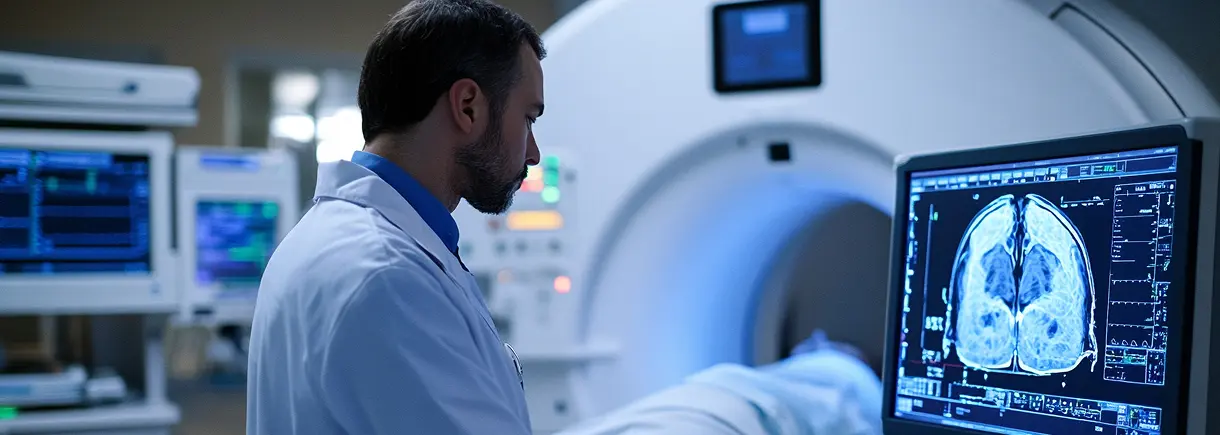
Breast MRI can be used for several different questions: supplemental screening in selected people at higher risk, evaluation of a known cancer, assessment of treatment response, or investigation of possible silicone implant rupture. These purposes are not interchangeable. An examination intended to detect or assess cancer generally uses intravenous contrast, whereas an implant-integrity examination often uses a different protocol without contrast. Knowing the purpose helps explain why two people with the same broad test name may have different scan instructions. Previous breast imaging, biopsy findings and relevant treatment history give the radiologist context for interpreting the new examination.
A breast screening plan depends on personal risk and should explain what each test contributes. MRI may be considered alongside other breast imaging for selected higher-risk patients, but it does not automatically replace other recommended breast screening. Screening also has tradeoffs: an abnormal result can lead to extra imaging or biopsy, and a reassuring result cannot guarantee that no cancer is present. If you discover a new lump or other breast change between planned screens, discuss it with a clinician instead of waiting for the next screening appointment. The appropriate evaluation of a symptom is a different decision from choosing a routine screening schedule.
Breast reports commonly use BI-RADS to communicate the radiologist’s assessment and recommended next step. A category is not a tissue diagnosis. It can indicate that the study needs more information, that findings appear benign, that follow-up imaging is appropriate, or that biopsy should be considered. The report should be read as a whole, including the finding’s location, comparison with earlier studies and the recommendation. Ask which action is needed, who will arrange it and how the recommendation relates to earlier breast imaging. Retaining both the report and images can help the next interpreting team make a meaningful comparison.
Some suspicious findings are visible on MRI but are difficult to identify using another imaging method. In that situation, MRI guidance may be used during a separate biopsy procedure to direct a needle to the area of interest. The purpose is to obtain tissue for laboratory examination, not simply to repeat the diagnostic scan. A needle biopsy generally samples an area rather than removing the entire imaging finding. After sampling, the imaging and pathology results need to be considered together to determine whether they provide a consistent explanation. This follow-up pathway is one reason a suspicious MRI result requires a clear next step. It does not mean that every MRI finding needs biopsy, or that diagnostic MRI automatically includes a biopsy service.
Breast cancer evaluation can involve imaging, a clinical examination and tissue testing. Images help locate an abnormality and assess its extent, while a pathologist examines sampled tissue to determine what it is. When cancer has already been diagnosed, the treatment team may use additional imaging to answer a particular planning question. The necessary tests depend on the case; a larger collection of scans does not automatically produce a better treatment plan. Patients can keep the discussion focused by asking whether the current examination is intended to clarify a new finding, assess a known diagnosis or evaluate change during treatment. These purposes can lead to different interpretations of an abnormal-looking area and different recommendations for what should happen next.
Comparing earlier and current studies may help show whether an observation is longstanding or new. The radiologist may also relate an MRI finding to another breast imaging study of the same area. Written reports are useful, but the actual prior images can add information that the text alone does not show. When care has moved between facilities, ask how those images can be shared. A comparison recommendation should be resolved before interpreting an isolated phrase as a final conclusion.
| Focus | What the study can add | What to keep in mind |
|---|---|---|
| Supplemental assessment | Breast MRI may add information in selected screening or diagnostic situations. | It does not replace every recommended breast screening test. |
| Contrast-enhanced images | Many breast MRI examinations use injected contrast. | Implant assessment and other requests may use different techniques. |
| Comparison and follow-up | Prior breast images and reports can help interpretation. | An imaging finding may still require further assessment or biopsy. |
A doctor’s order is required before your scan. Have prior breast imaging and the referring clinician's details available. Tell the team about implants, pregnancy and previous contrast reactions. Ask whether timing within your menstrual cycle matters for the planned examination.
This dedicated examination is arranged at the Dickinson center using High-field MRI. MRI appointments are scheduled on Thursdays. Confirm the current availability, preparation and exact study when you call; this examination is not booked at Richmond Avenue or on the Walters Road open scanner.
The team explains positioning and communication for the scan. Follow instructions about staying still and any brief breathing steps. Ask before the scan begins how to raise a concern, and tell the technologist if you need help.
Your radiologist’s report goes to the ordering clinician, who will explain the findings and next steps. Contact our records team for copies of your images or report.
Request images and reportsRequest an estimate for the examination on your referral, including contrast and radiologist interpretation. Confirm your plan’s network status and authorization requirements.
Costs, insurance & financingAvailable locations: Dickinson. Confirm your exact protocol when booking.
View locations & hoursCommon questions
No. Your clinician considers your risk, symptoms and previous imaging when deciding whether breast MRI will be useful.
Call 877-345-4244 with your order or request a callback. The team confirms the requested protocol, appropriate center and appointment options. A callback request does not itself confirm a booking.
Ask for a current quote for the exact study, including any contrast and the radiologist’s interpretation. Confirm separate charges and payment terms. If using insurance, check your plan’s network, benefits and authorization requirements.
Read each requested study to scheduling. Ask whether separate appointments or estimates are needed and whether any preparation instructions conflict. The office can obtain clarification from the referring clinician when necessary.
Ask which earlier images and reports are useful and how to transfer them. An existing scan may help comparison, but the clinical team determines whether it answers the current question or meets any specialized analysis requirements.
Arrange the report discussion with the clinician who ordered the examination or manages your care. Ask how the report will reach that office and when follow-up is appropriate. Records staff can help arrange copies for another provider.
Not necessarily. Some noncancerous breast tissue also takes up contrast and appears conspicuous. When imaging cannot confidently characterize a finding, targeted ultrasound, additional imaging or biopsy may be recommended. The recommendation describes how to clarify the result; it does not establish cancer on its own. The radiologist’s assessment and any tissue results need to be considered together by the treating clinician.
Do not change your screening plan based on one result alone. Different breast tests can contribute different information, and the right combination depends on your risk, age and clinical history. Ask the clinician managing your screening whether another breast examination remains due. A new breast symptom also deserves assessment even when a previous screening test was reported as normal.
Usually it obtains tissue samples rather than removing the entire finding. The pathology result is then considered with the imaging appearance. If they do not adequately explain one another, further assessment may be needed. Ask the treating team whether the results are concordant and what follow-up has been recommended for the particular finding.
Treatment decisions depend on the full clinical assessment, including tissue results when cancer is suspected or established. MRI may add useful information about a finding or its extent, but it is one part of that discussion. Ask which specific treatment-planning question the scan is expected to address and how it relates to your other results.
Yes. Advantis requires a doctor’s order for every scan, including self-pay appointments. You can request a callback before you have the order; it must be available before the examination.
Have your referral ready. Our team will confirm your scan, location and available appointment times.
