I had a CT Scan done there today & the service that I received was excellent.
Linda Williams
 Google review
Everyday imaging
Detailed CT Imaging | Board-Certified Radiologists
Best Price Guarantee 4.9
Patient stories
Real patient stories from Advantis MRI & Diagnostic Imaging.
4.9 / 5from 1,000+ reviewsI had a CT Scan done there today & the service that I received was excellent.
Google reviewThe front desk was helpful. The CT and X-ray Technicians were gentle.
Google reviewstaff was really nice and they provided me with all the information through telephone.
Google reviewI've had 3 MRI's, one CT scan and one X-ray from this fine group. Very efficient and extremely friendly.
Google reviewThe staff is Amazing especially the MRI Tech she was patient and helpful due to my anxiety.
Google reviewGreat customer service and gave me really good comfort while getting my MRI. I will recommend coming here for services.
Google reviewUnderstand the examination
CT uses X-rays and computer processing to produce cross-sectional images. It can examine organs, bones and blood vessels. Some examinations use injected or oral contrast; others do not. The ordered study determines the preparation.
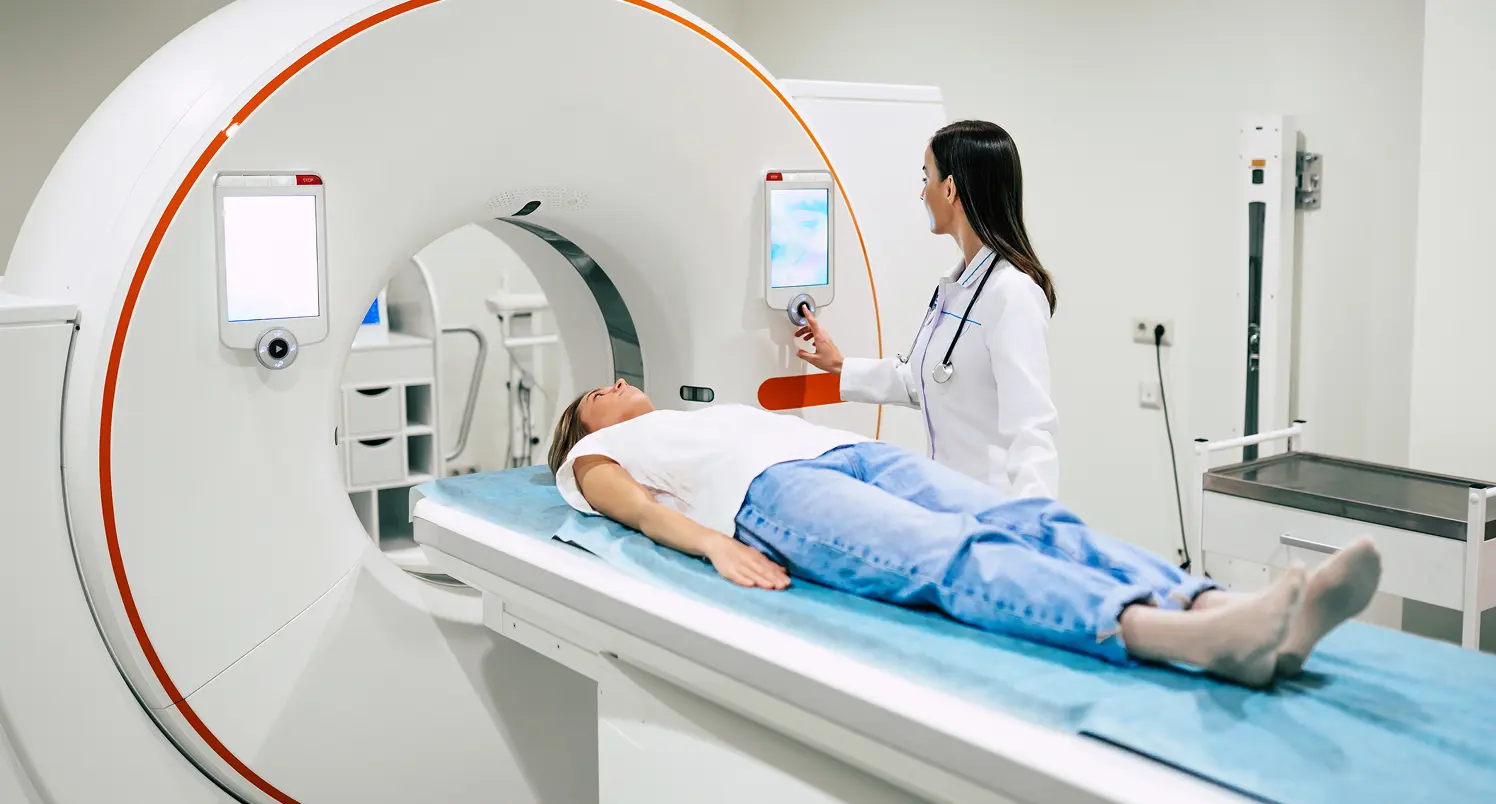
CT collects X-ray measurements around the body and uses a computer to reconstruct a series of slices. The radiologist can review structures at different levels and from different directions, reducing the overlap that can limit a conventional X-ray. The table moves through a short opening while data are acquired. For some regions, a brief breath hold helps keep the anatomy in a consistent position. The reconstructed images may be numerous even when acquisition feels quick. The number of pictures in the image viewer is not a measure of how many separate scans or radiation exposures a patient received.
Injected contrast helps distinguish blood vessels and the way organs or abnormalities take up contrast. Oral contrast, when requested, serves a different purpose by helping identify parts of the digestive tract. A study can involve one route, both routes or neither. Timing after an injection can also matter, so a routine contrast CT and an angiographic examination are not equivalent. If a clinician wants to investigate a new question after a previous CT, the earlier study may not contain the necessary contrast phase. The choice should reflect a useful diagnostic question rather than a preference for the largest possible examination.
CT uses ionizing radiation, and the amount depends on the examined region and technique. The aim is to obtain information that can help care while avoiding imaging that will not change the decision. Ask what the examination is intended to resolve and whether an earlier study already answers that question. For follow-up, the benefit of assessing change is considered alongside the need for another exposure. Published dose examples are estimates, not an exact description of your examination. Pregnancy and pediatric imaging require specific planning. A clinically needed CT should be discussed with the responsible clinician rather than rejected or substituted based only on a general dose table.
A CT report can contain both the answer to the referral and observations discovered elsewhere in the covered region. Separate these during follow-up. Ask which finding relates to the original problem, whether an unexpected observation needs further assessment, and who will arrange that assessment. The words no acute abnormality address urgent or recent structural findings within the limits of the examination; they do not guarantee that every cause of a symptom has been excluded. If a scan was performed elsewhere, supplying the actual images can be more useful than recalling that an earlier result was normal. Keep dates and facilities with your records.
| Focus | What the study can add | What to keep in mind |
|---|---|---|
| Cross-sectional images | CT uses X-rays to create detailed views of the requested region. | It involves ionizing radiation; suitability is a clinical decision. |
| Different organs and tissues | Dedicated protocols can evaluate structures in the head, chest, abdomen and other regions. | One body-region study does not examine the entire body. |
| Contrast technique | Oral and injected contrast can answer different questions. | A study without contrast is not automatically equivalent to one with contrast. |
A doctor’s order is required before your scan. Ask whether your examination needs contrast, fasting or a recent kidney function result. Tell the team about pregnancy, kidney problems, medications and any previous reaction to contrast. Do not change medication on your own.
The body region and protocol matter. A routine CT, CT angiography, cardiac calcium scoring and low-dose lung screening answer different questions. Read the full order to scheduling and ask whether any earlier images are needed. Our team can confirm the appropriate center for specialized examinations.
Your appointment instructions should specify whether contrast is involved and what preparation is needed. Ask whether there is a drink to take beforehand, an injection during the visit or no contrast planned. If the appointment details differ from the written order, contact the team for clarification before you arrive.
When asking about price and availability, keep the requested body region and contrast instructions consistent. Ask whether the quote includes the radiologist’s report, whether any charge comes separately and when payment is expected. Confirm total visit time as well as the scanning time, particularly if you need to arrange transportation.
The team prepares the ordered study and explains positioning, any contrast steps and instructions during imaging. Ask about the full visit window beforehand, particularly when oral preparation is involved.
Your radiologist’s report goes to the ordering clinician, who will explain the findings and next steps. Contact our records team for copies of your images or report.
Request images and reportsRequest an estimate for the examination on your referral, including contrast and radiologist interpretation. Confirm your plan’s network status and authorization requirements.
Costs, insurance & financingAvailable locations: Richmond Avenue, Walters Road, Dickinson. Confirm your exact protocol when booking.
View locations & hoursCommon questions
The image acquisition may be brief, but check-in, positioning and contrast preparation add time. Ask scheduling for the total visit length for your exact examination.
Call 877-345-4244 with your order or request a callback. The team confirms the requested protocol, appropriate center and appointment options. A callback request does not itself confirm a booking.
Ask for a current quote for the exact study, including any contrast and the radiologist’s interpretation. Confirm separate charges and payment terms. If using insurance, check your plan’s network, benefits and authorization requirements.
Read each requested study to scheduling. Ask whether separate appointments or estimates are needed and whether any preparation instructions conflict. The office can obtain clarification from the referring clinician when necessary.
Ask which earlier images and reports are useful and how to transfer them. An existing scan may help comparison, but the clinical team determines whether it answers the current question or meets any specialized analysis requirements.
Arrange the report discussion with the clinician who ordered the examination or manages your care. Ask how the report will reach that office and when follow-up is appropriate. Records staff can help arrange copies for another provider.
Often the computer can create additional views from information already acquired, but this depends on the original coverage and technical requirements. A new clinical question may require different data. Ask whether the proposed view uses existing images or requires a separate examination.
No. Additional phases should serve a defined purpose. Some questions are answered with a noncontrast study, others with a contrast study or a particular combination. The imaging team selects the protocol from the referral and clinical information rather than applying one combination to everyone.
Yes. Advantis requires a doctor’s order for every scan, including self-pay appointments. You can request a callback before you have the order; it must be available before the examination.
Have your referral ready. Our team will confirm your scan, location and available appointment times.
The patient guide
Preparing for a scan
The scan itself can be quick. Your appointment may also include check-in, preparation and time for contrast.
Preparing for a scan
Use the instructions for your ordered CT study to plan food, medication, contrast and arrival time.
Understanding imaging
The right CT protocol depends on the question your clinician needs answered. Here is what to clarify before your appointment.

Costs & appointments
Looking for affordable CT Scan options without insurance? Compare the complete self-pay estimate and ask Advantis about its Best Price Guarantee before booking.
Understanding imaging
An abdominal CT gives detailed cross-sectional images. The ordered region and protocol determine what the radiologist evaluates.
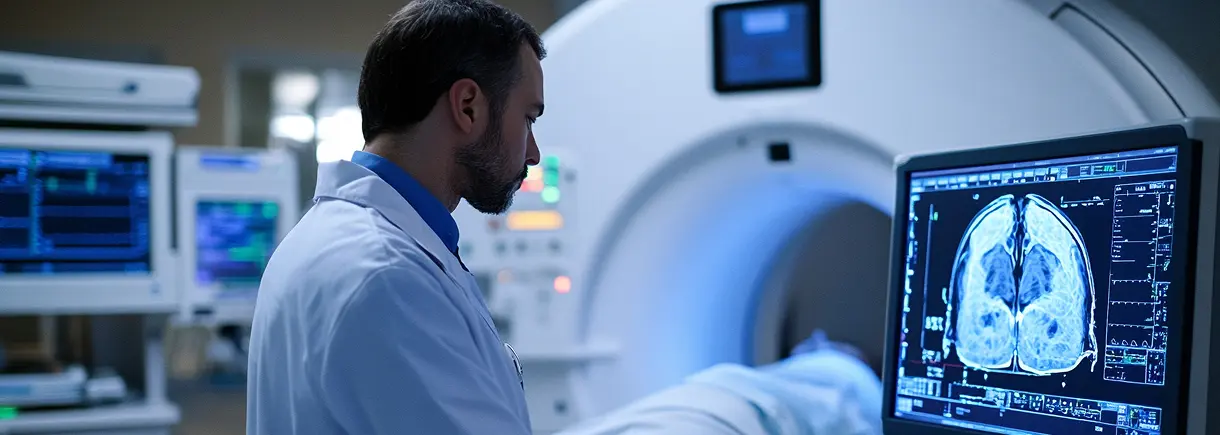
Understanding imaging
Both make images inside the body, but they answer clinical questions in different ways.
