The staff is Amazing especially the MRI Tech she was patient and helpful due to my anxiety.
Ciairra Washington
 Google review
Meniscus, Ligament & Cartilage Imaging | Radiologist Interpretation
Best Price Guarantee 4.9
4.9Patient stories
Real patient stories from Advantis MRI & Diagnostic Imaging.
4.9 / 5from 1,000+ reviewsThe staff is Amazing especially the MRI Tech she was patient and helpful due to my anxiety.
Google reviewGreat customer service and gave me really good comfort while getting my MRI. I will recommend coming here for services.
Google reviewThey work to make sure things are comfortable and correct. Great place to get an MRI, if you have to.
Google reviewThis is my third visit to Advantis and I highly recommend them for x-ray and imaging needs.
Google reviewI've had 3 MRI's, one CT scan and one X-ray from this fine group. Very efficient and extremely friendly.
Google reviewVery clean and neat lobby and they have snacks!! Staff was wonderful and the tech was really quick and generous.
Google reviewUnderstand the examination
Knee MRI can assess the menisci, ligaments, tendons, cartilage and surrounding structures. The examination may help a clinician evaluate an injury, ongoing symptoms or a concern after surgery.
Prefer an open scanner? Open Knee MRI at Walters Road explains the open examination and positioning.
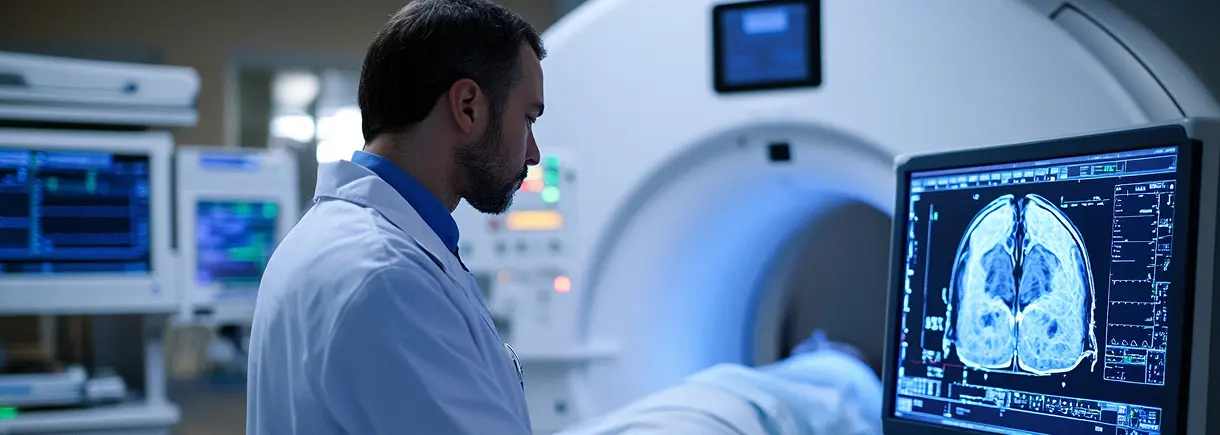
The menisci are cushioning structures between the thighbone and shinbone, while articular cartilage covers joint surfaces. The cruciate and collateral ligaments help stabilize the knee, and the tendons connect muscle to bone. These structures can be injured in different combinations. A twisting event, a direct impact and gradually increasing pain can lead to different clinical questions even when swelling is present in each case. MRI can show several of these tissues in the same examination, but the radiologist still benefits from knowing the mechanism of injury, location of pain and whether the knee locks or gives way.
Meniscal tears can occur after an injury or develop with degenerative change. The location and pattern of a tear, associated joint changes and the symptoms all matter when a clinician considers treatment. An MRI report should therefore be discussed alongside the knee examination and functional limitations. Ask which finding is thought to explain your problem and whether there are other changes contributing to it. The existence of a tear does not establish that surgery is necessary. It also does not identify the best rehabilitation plan without an assessment of your movement, activity demands and the wider condition of the joint.
A reconstructed ligament, repaired meniscus or joint implant creates a different imaging context from an untreated knee. Tell the team what procedure was performed and when, and provide earlier reports when requested. Surgical material can affect image quality, and the clinical question may require a protocol chosen for the postoperative situation. Do not interpret altered anatomy as a new injury simply because the report describes it. At follow-up, ask what is expected after the operation and what finding is new or relevant to current symptoms. A comparison with preoperative or earlier postoperative imaging may help make that distinction.
Before the results visit, note the activities that are difficult: standing from a chair, using stairs, straightening the knee, pivoting or walking a usual distance. Record whether the problem is pain, restricted motion or a feeling of instability. This makes the follow-up conversation more specific than asking whether the MRI is good or bad. If the examination does not show the expected injury, ask what other explanation the clinician is considering and whether reassessment is needed. If several abnormalities are reported, ask which one is most likely to affect the next decision. Imaging detail is most useful when connected to a practical care question.
| Focus | What the study can add | What to keep in mind |
|---|---|---|
| Menisci and cartilage | MRI can assess the cartilage surfaces and menisci within the joint. | The importance of a finding depends on symptoms and examination. |
| Ligaments and tendons | Images can help evaluate injury to supporting soft tissues. | Imaging alone does not determine the treatment or return-to-sport plan. |
| Bone and surrounding tissue | The study can assess marrow and tissues around the knee. | Previous surgery and earlier images can affect interpretation. |
A doctor’s order is required before your scan. Discuss implants, prior surgery, possible pregnancy and earlier contrast reactions with the imaging team. Have device information available for safety screening. Ask for clothing, food and medication instructions for the ordered examination.
Confirm which knee is on the order. If both are requested, ask how the two studies will be scheduled and quoted. Tell the team about previous knee surgery, implants or difficulty straightening the leg. A routine knee MRI and an MR arthrogram require different arrangements.
The team explains positioning and communication for the scan. Follow instructions about staying still and any brief breathing steps. Ask before the scan begins how to raise a concern, and tell the technologist if you need help.
Your radiologist’s report goes to the ordering clinician, who will explain the findings and next steps. Contact our records team for copies of your images or report.
Request images and reportsRequest an estimate for the examination on your referral, including contrast and radiologist interpretation. Confirm your plan’s network status and authorization requirements.
Costs, insurance & financingAvailable locations: Richmond Avenue, Walters Road, Dickinson. Confirm your exact protocol when booking.
View locations & hoursCommon questions
The requested protocol determines whether contrast is needed. Ask the office to check your order; do not assume that a routine MRI and an arthrogram involve the same procedure.
Call 877-345-4244 with your order or request a callback. The team confirms the requested protocol, appropriate center and appointment options. A callback request does not itself confirm a booking.
Ask for a current quote for the exact study, including any contrast and the radiologist’s interpretation. Confirm separate charges and payment terms. If using insurance, check your plan’s network, benefits and authorization requirements.
Read each requested study to scheduling. Ask whether separate appointments or estimates are needed and whether any preparation instructions conflict. The office can obtain clarification from the referring clinician when necessary.
Ask which earlier images and reports are useful and how to transfer them. An existing scan may help comparison, but the clinical team determines whether it answers the current question or meets any specialized analysis requirements.
Arrange the report discussion with the clinician who ordered the examination or manages your care. Ask how the report will reach that office and when follow-up is appropriate. Records staff can help arrange copies for another provider.
An X-ray provides information about bone and alignment, while MRI can add detail about menisci, ligaments, tendons and cartilage. The tests can answer complementary questions. A clinician chooses further imaging based on the examination and whether the result could change management.
No. Treatment depends on symptoms, tear features, associated joint changes and the clinical assessment. Ask what the imaging adds to the decision and what options are appropriate for your circumstances. A report naming a tear is not itself an instruction to proceed with surgery.
Yes. Advantis requires a doctor’s order for every scan, including self-pay appointments. You can request a callback before you have the order; it must be available before the examination.
Have your referral ready. Our team will confirm your scan, location and available appointment times.
