I had a CT Scan done there today & the service that I received was excellent.
Linda Williams
 Google review
CT examinations
Abdominal & Pelvic Organ Imaging | Radiologist Interpretation
Best Price Guarantee 4.9
4.9Patient stories
Real patient stories from Advantis MRI & Diagnostic Imaging.
4.9 / 5from 1,000+ reviewsI had a CT Scan done there today & the service that I received was excellent.
Google reviewThe front desk was helpful. The CT and X-ray Technicians were gentle.
Google reviewstaff was really nice and they provided me with all the information through telephone.
Google reviewI've had 3 MRI's, one CT scan and one X-ray from this fine group. Very efficient and extremely friendly.
Google reviewThe staff is Amazing especially the MRI Tech she was patient and helpful due to my anxiety.
Google reviewGreat customer service and gave me really good comfort while getting my MRI. I will recommend coming here for services.
Google reviewUnderstand the examination
CT of the abdomen and pelvis can examine organs, bowel and other structures across both regions. The clinical question determines the contrast protocol and preparation.
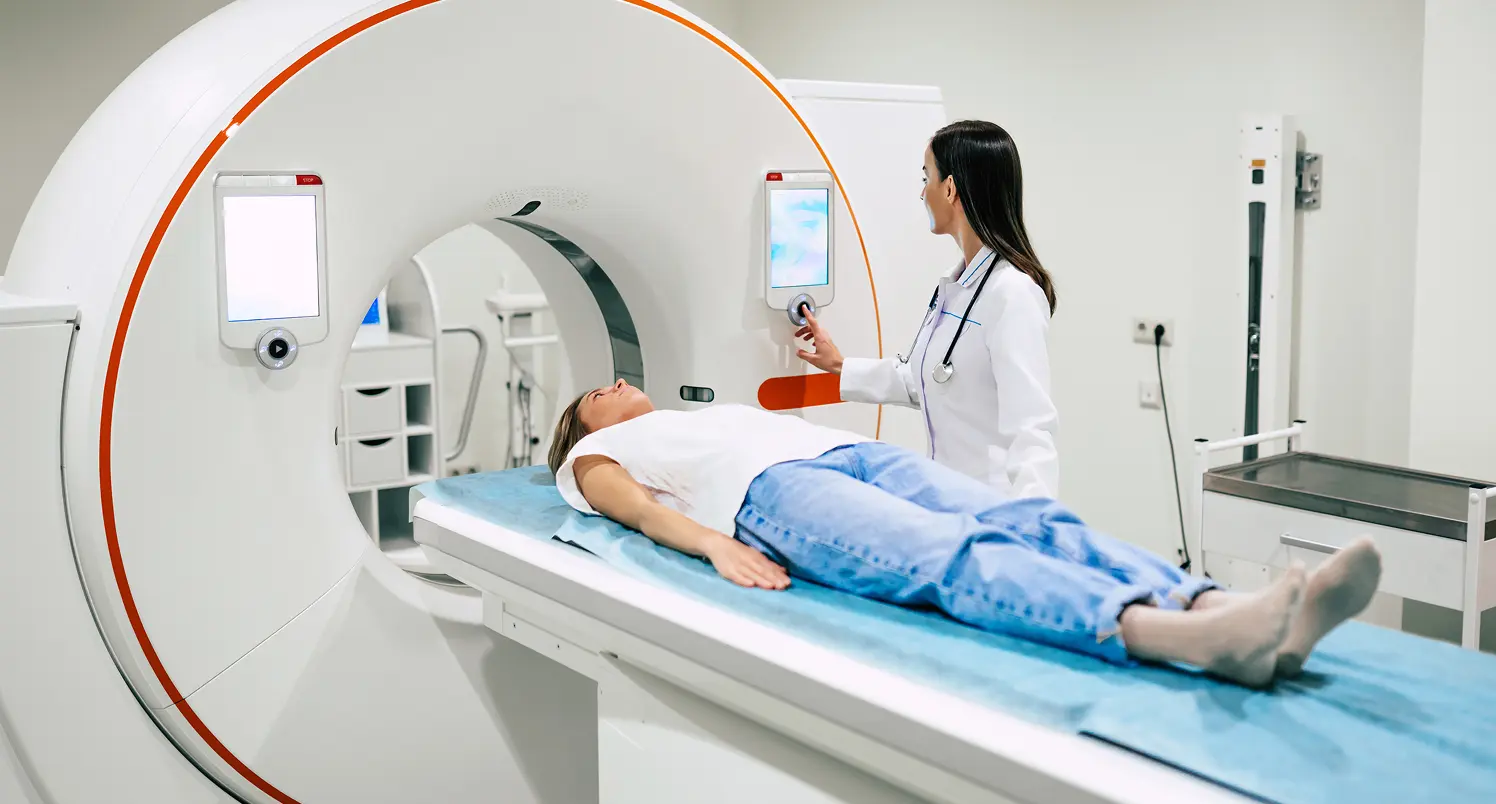
An abdomen and pelvis CT can examine a broad region containing digestive organs, urinary structures and surrounding tissues. It may help investigate inflammation, obstruction, injury or a finding detected previously. The protocol determines which structures are best assessed and whether contrast is used. Oral and injected contrast have different roles, and a study designed for one question may not answer every other question equally well. If an earlier examination prompted the referral, provide its report and images when requested. This helps the new study address the unresolved issue rather than repeat broad imaging without a clear purpose.
CT can help identify a stone’s location and size and whether it is associated with blockage. That information is interpreted with symptoms, examination and other tests. A study performed for a suspected stone is not automatically the same as a study intended to evaluate an organ finding or the lining of the urinary tract. Read the exact examination name when clarifying the order. If a stone is found, the scan result alone does not determine the best treatment. The clinician considers the clinical situation, including whether there are features requiring prompt assessment rather than routine outpatient follow-up.
Conditions such as appendicitis are evaluated from the history, examination, laboratory information and appropriate imaging. The preferred imaging pathway can differ for children, pregnancy and other circumstances. CT is therefore not a universal first choice for every person with abdominal pain. Severe or worsening symptoms need medical assessment rather than self-booking a scan and waiting for a report. For a planned outpatient study, tell the referring clinician if the symptoms have materially changed since the order was written. The original imaging plan may need reconsideration when the clinical situation changes.
A broad examination may describe incidental findings in addition to the main answer. Ask the clinician which finding relates to the original concern, whether another observation needs follow-up and whether comparison with earlier images is available. A recommendation for focused ultrasound, MRI or another examination often means that a particular finding needs different characterization; it is not a diagnosis by itself. Keep track of the specific organ and question rather than recording only that another scan was advised. If no structural explanation is identified, ongoing symptoms still belong in a clinical follow-up discussion.
| Focus | What the study can add | What to keep in mind |
|---|---|---|
| Organs and bowel | CT can assess structures across the abdomen and pelvis. | A combined order should identify both regions. |
| Contrast technique | Oral or injected contrast may be chosen for the clinical question. | Preparation differs between protocols. |
| Findings and follow-up | The report describes findings within the imaged areas. | It cannot rule out every possible cause of abdominal symptoms. |
A doctor’s order is required before your scan. Tell the imaging team about possible pregnancy, kidney conditions and earlier contrast reactions. Ask whether laboratory results, fasting or contrast preparation are needed for the requested protocol. Obtain individual instructions before changing regular medication.
Read whether the order covers the abdomen, pelvis or both. Ask if oral contrast, injected contrast or another preparation step is planned, and obtain the arrival instructions for that protocol. When comparing estimates, keep both the body regions and contrast wording consistent.
The team prepares the ordered study and explains positioning, any contrast steps and instructions during imaging. Ask about the full visit window beforehand, particularly when oral preparation is involved.
Your radiologist’s report goes to the ordering clinician, who will explain the findings and next steps. Contact our records team for copies of your images or report.
Request images and reportsRequest an estimate for the examination on your referral, including contrast and radiologist interpretation. Confirm your plan’s network status and authorization requirements.
Costs, insurance & financingCall with your referral and preferred location to confirm where your examination is available.
View locations & hoursCommon questions
Contrast use depends on the clinical question and protocol. Ask scheduling to check the order and obtain instructions specific to your examination rather than assuming that every abdominal CT is prepared the same way.
Call 877-345-4244 with your order or request a callback. The team confirms the requested protocol, appropriate center and appointment options. A callback request does not itself confirm a booking.
Ask for a current quote for the exact study, including any contrast and the radiologist’s interpretation. Confirm separate charges and payment terms. If using insurance, check your plan’s network, benefits and authorization requirements.
Read each requested study to scheduling. Ask whether separate appointments or estimates are needed and whether any preparation instructions conflict. The office can obtain clarification from the referring clinician when necessary.
Ask which earlier images and reports are useful and how to transfer them. An existing scan may help comparison, but the clinical team determines whether it answers the current question or meets any specialized analysis requirements.
Arrange the report discussion with the clinician who ordered the examination or manages your care. Ask how the report will reach that office and when follow-up is appropriate. Records staff can help arrange copies for another provider.
No. Imaging helps describe the stone and any obstruction, but treatment depends on the complete clinical situation. Discuss the result with the responsible clinician and ask whether any symptoms require prompt care. The image finding alone is not an individualized treatment recommendation.
No. Age, pregnancy and the clinical assessment influence the imaging pathway. Ultrasound or MRI may be used in some situations. Suspected appendicitis needs timely clinical evaluation; choosing an outpatient imaging method should not delay that assessment.
Yes. Advantis requires a doctor’s order for every scan, including self-pay appointments. You can request a callback before you have the order; it must be available before the examination.
Have your referral ready. Our team will confirm your scan, location and available appointment times.