I had a CT Scan done there today & the service that I received was excellent.
Linda Williams
 Google review
Specialized imaging
Low-Dose Lung Imaging | Screening for Eligible Patients
Best Price Guarantee 4.9
Patient stories
Real patient stories from Advantis MRI & Diagnostic Imaging.
4.9 / 5from 1,000+ reviewsI had a CT Scan done there today & the service that I received was excellent.
Google reviewThe front desk was helpful. The CT and X-ray Technicians were gentle.
Google reviewstaff was really nice and they provided me with all the information through telephone.
Google reviewI've had 3 MRI's, one CT scan and one X-ray from this fine group. Very efficient and extremely friendly.
Google reviewThe staff is Amazing especially the MRI Tech she was patient and helpful due to my anxiety.
Google reviewGreat customer service and gave me really good comfort while getting my MRI. I will recommend coming here for services.
Google reviewUnderstand the examination
Low-dose CT screening looks for lung cancer in selected people at increased risk who do not have symptoms. Eligibility depends on factors such as age and smoking history. Screening can also find abnormalities that need further assessment.
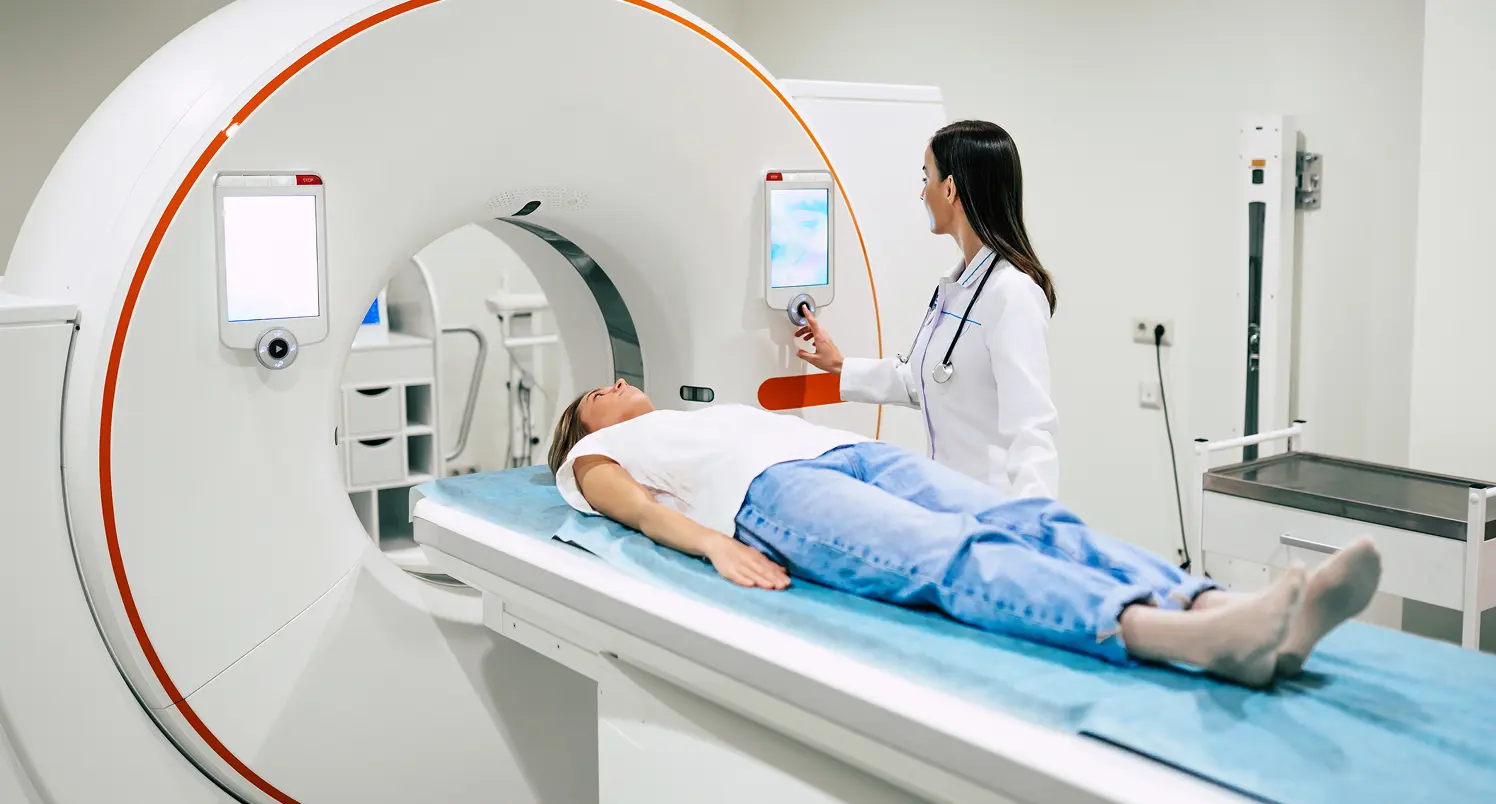
The US Preventive Services Task Force recommends annual low-dose CT screening for adults aged 50 to 80 who have at least a 20 pack-year smoking history and currently smoke or stopped within the past 15 years. A pack-year combines the amount smoked with the duration: one pack daily for 20 years equals 20 pack-years. The recommendation also considers whether a person could benefit from evaluation and treatment if cancer were found. Eligibility should be discussed with a clinician; a smoking history alone does not describe every relevant factor. Screening decisions and insurance coverage criteria are related but are not necessarily identical.
Low-dose lung screening looks for possible lung cancer before symptoms appear in people whose risk makes screening worthwhile. It is not simply a cheaper name for every chest CT. A person being assessed for a current symptom may need a different examination and clinical pathway. Screening generally uses a lower radiation exposure than a conventional diagnostic chest CT and does not usually need an intravenous contrast injection. Its value also depends on a plan for interpreting the result and arranging recommended follow-up. Ask whether the referral is for a screening program or investigation of a specific problem so the right protocol is selected.
Screening can reveal small lung nodules that are not cancer. Depending on their appearance and comparison with earlier images, a clinician may recommend surveillance imaging or further assessment. This is one reason previous chest images can be useful: change over time can help distinguish findings that deserve closer attention. Screening also has potential harms, including false alarms, radiation exposure and procedures used to clarify uncertain results. The next step should therefore be proportionate to the finding and the person’s overall situation. At follow-up, ask what was seen, whether earlier images were compared, and what event or interval should trigger the next action.
Lung screening reports may use Lung-RADS, a structured system for describing findings and recommending management. The category helps the clinical team communicate the level of concern and the suggested next step. It is not a pathology diagnosis, and the recommendation should be read with the description of any nodule and comparison with prior examinations. Depending on the findings, follow-up may remain part of routine screening or may involve a different interval or additional evaluation. Ask for the actual recommendation rather than drawing a conclusion from the category number alone. Keep the report and prior imaging accessible, especially if changing providers, so the next assessment can take account of what was previously seen and what follow-up was advised.
Lung screening looks for possible cancer; it does not remove the ongoing health effects of smoking. Stopping smoking can reduce risks involving the lungs, heart and other organs, so support for quitting remains relevant whether the scan is reassuring or shows a finding. A screening conversation can include help choosing an approach to stopping, reviewing previous attempts and identifying available support. It should avoid framing the scan as protection that makes continued smoking safe. Former smokers also benefit from maintaining cessation even when follow-up imaging remains recommended. Discuss prevention and imaging as connected parts of care, while recognizing that a scan result and progress with quitting are different measures and should not be treated as judgments of the person.
The benefit of a screening examination depends partly on what happens after the images are taken. A patient needs to know how the interpretation will be communicated and how a recommendation will reach the clinician responsible for care. If the report calls for repeat screening or evaluation, clarify the next action. When moving between providers, share the previous studies and the plan rather than relying on a recollection that the earlier scan was “fine.”
| Focus | What the study can add | What to keep in mind |
|---|---|---|
| Screening purpose | Low-dose CT can screen selected people at increased risk of lung cancer. | Eligibility and repeat screening are discussed with a clinician. |
| Lung findings | Screening can identify nodules and other findings that need interpretation. | A nodule does not automatically mean cancer. |
| Follow-up | Results may lead to surveillance or additional assessment. | A screening appointment is not a replacement for evaluating current symptoms. |
A doctor’s order is required before your scan. Ask your clinician to document the screening order and eligibility. Confirm insurance requirements and whether prior chest scans should be provided. If you have new symptoms, ask your clinician about diagnostic assessment instead.
The team prepares the ordered study and explains positioning, any contrast steps and instructions during imaging. Ask about the full visit window beforehand, particularly when oral preparation is involved.
Your radiologist’s report goes to the ordering clinician, who will explain the findings and next steps. Contact our records team for copies of your images or report.
Request images and reportsRequest an estimate for the examination on your referral, including contrast and radiologist interpretation. Confirm your plan’s network status and authorization requirements.
Costs, insurance & financingCall with your referral and preferred location to confirm where your examination is available.
View locations & hoursCommon questions
No. Screening eligibility and repeat intervals depend on clinical guidelines and your circumstances. Your clinician should discuss the benefits, limitations and follow-up plan.
Call 877-345-4244 with your order or request a callback. The team confirms the requested protocol, appropriate center and appointment options. A callback request does not itself confirm a booking.
Ask for a current quote for the exact study, including any contrast and the radiologist’s interpretation. Confirm separate charges and payment terms. If using insurance, check your plan’s network, benefits and authorization requirements.
Read each requested study to scheduling. Ask whether separate appointments or estimates are needed and whether any preparation instructions conflict. The office can obtain clarification from the referring clinician when necessary.
Ask which earlier images and reports are useful and how to transfer them. An existing scan may help comparison, but the clinical team determines whether it answers the current question or meets any specialized analysis requirements.
Arrange the report discussion with the clinician who ordered the examination or manages your care. Ask how the report will reach that office and when follow-up is appropriate. Records staff can help arrange copies for another provider.
Some do. Under the USPSTF recommendation, the age and smoking exposure thresholds must be met, and the person must currently smoke or have quit within the previous 15 years. Decisions also take overall health and the potential benefit of treatment into account. Provide an accurate history of years smoked, usual daily amount and quit date so the clinician can assess the recommendation in context.
No. It means the examination found something that needs an appropriate next step. Many screening findings prove noncancerous, and the follow-up can involve comparison or additional imaging rather than an immediate invasive procedure. Ask the clinician to explain the finding and the recommended plan. It is important both to avoid assuming a diagnosis and to complete follow-up when it has been recommended.
No. Lung-RADS is used to describe screening findings and recommend management. Cancer staging is a different process for an established diagnosis. Review the category alongside the report’s written recommendation and any comparison with prior scans. Ask what the next action is and who will coordinate it rather than interpreting the number as a diagnosis.
No. Screening may identify a possible cancer earlier in eligible people, but it does not prevent the broader harms of smoking. Stopping smoking offers health benefits beyond what imaging can provide. Ask your healthcare team about support that fits your circumstances, and continue the screening or follow-up plan recommended for your risk and clinical situation.
Yes. Advantis requires a doctor’s order for every scan, including self-pay appointments. You can request a callback before you have the order; it must be available before the examination.
Have your referral ready. Our team will confirm your scan, location and available appointment times.
The patient guide

Screening decisions
Screening is a decision about a specific test and a specific risk profile, not a single scan for everyone.
Screening decisions
Understand low-dose lung CT screening, the role of smoking history and why screening differs from investigating symptoms.
