This is my third visit to Advantis and I highly recommend them for x-ray and imaging needs.
Riah Kindle
 Google review
Everyday imaging
Walk-In X-Rays | Board-Certified Radiologists
Best Price Guarantee 4.9
Patient stories
Real patient stories from Advantis MRI & Diagnostic Imaging.
4.9 / 5from 1,000+ reviewsThis is my third visit to Advantis and I highly recommend them for x-ray and imaging needs.
Google review3rd time visit to advantis mri It was an Knee Xray Great service love the staff very friendly
Google reviewThe front desk was helpful. The CT and X-ray Technicians were gentle.
Google reviewI've had 3 MRI's, one CT scan and one X-ray from this fine group. Very efficient and extremely friendly.
Google reviewThe staff is Amazing especially the MRI Tech she was patient and helpful due to my anxiety.
Google reviewGreat customer service and gave me really good comfort while getting my MRI. I will recommend coming here for services.
Google reviewUnderstand the examination
X-rays create images using a small amount of ionizing radiation. They are commonly used to assess bones and certain chest concerns. The requested body part and views help the team prepare the correct study.
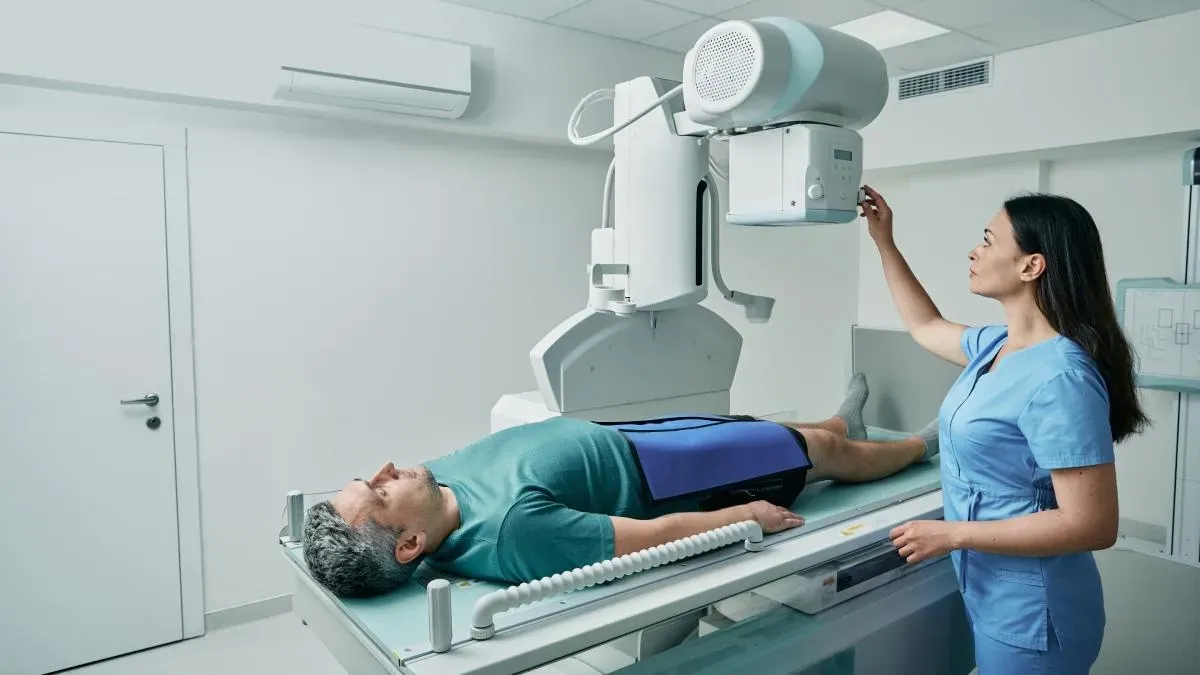
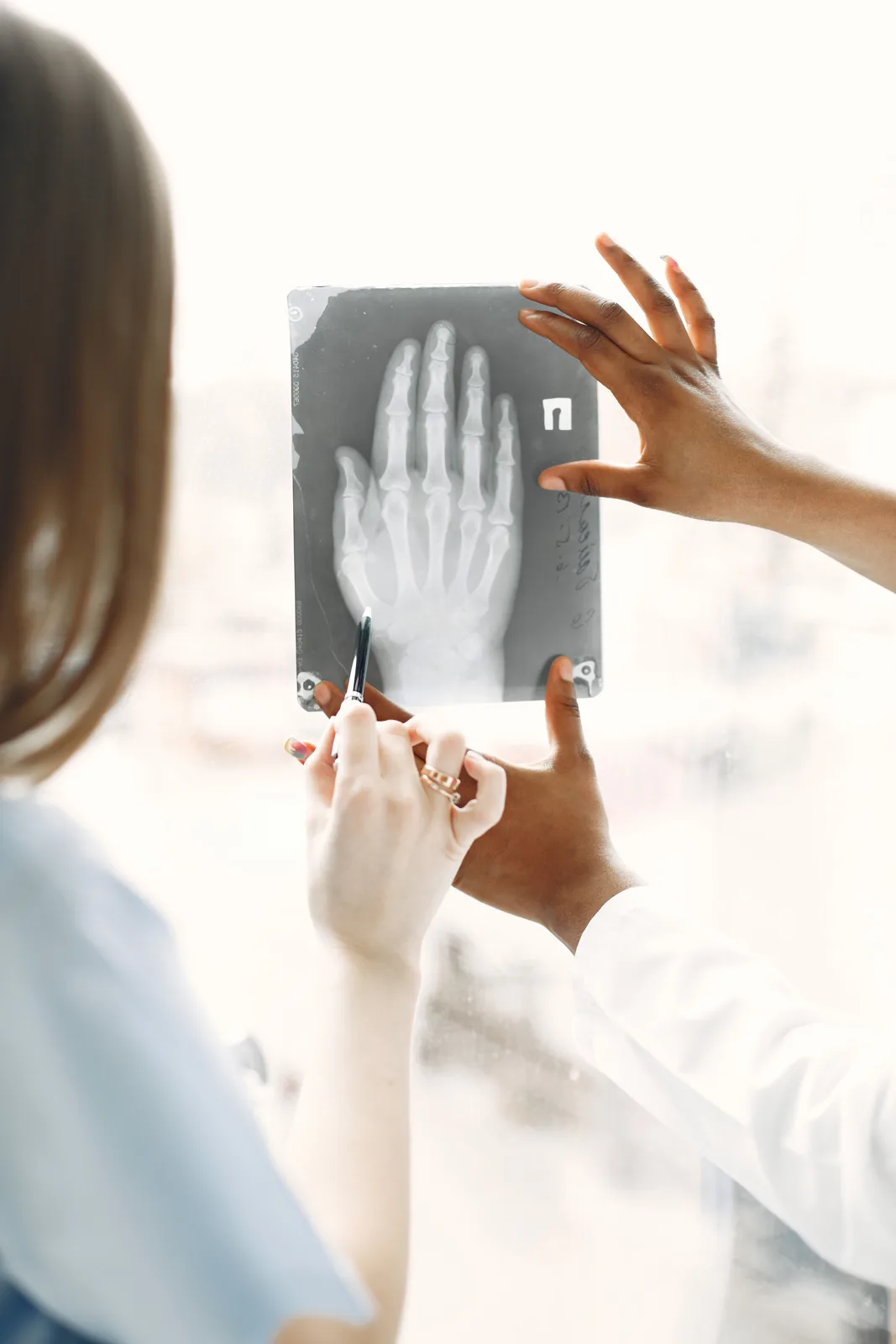
An X-ray forms a two-dimensional picture of the requested area. For a suspected fracture or joint problem, images from different directions help the radiologist judge alignment and see structures that overlap in one view. Some examinations also use a standing position to answer a question about a joint under load. More than one view does not necessarily mean that an abnormality was found during the first image. It can be part of the planned examination. Explain exactly where symptoms occur, how an injury happened and which movements are painful. These details help connect the pictures with the clinical question on the referral.
A chest X-ray examines the lungs, heart outline, chest wall and nearby structures. It may help a clinician investigate a persistent cough, breathing difficulty or a suspected chest infection. Its speed and broad overview are useful, but it does not reveal every chest condition. A small abnormality can be hidden by overlapping structures, and an ordinary chest X-ray does not directly show a blood clot in the lung arteries. If the symptoms or examination still raise concern, another test may be needed. The choice of additional imaging depends on the suspected problem; a normal chest X-ray is not a universal explanation for ongoing symptoms.
The findings section records what the radiologist sees, while the impression brings the most relevant observations together. A report may describe a change as stable when earlier images are available for comparison. It may also record an incidental observation unrelated to the reason for the examination. These terms do not by themselves say whether treatment is needed. At follow-up, ask which finding explains the original symptom, whether earlier studies changed the interpretation and whether any recommendation requires a separate action. Keep a copy of the report so a later clinician can distinguish an already known finding from something newly identified.
X-rays use ionizing radiation, so each examination should address a useful clinical question. The FDA describes two connected goals: justify the examination and use an imaging approach suited to the information needed. This is more meaningful than treating all scans as either completely harmless or something to avoid at any cost. A clinically appropriate examination may prevent a missed injury or help guide treatment. At the same time, sharing existing images can help the clinician decide whether another study would add information. Tell the team about possible pregnancy and relevant recent examinations. For a child, ask how the technique is adapted to their size and the requested area. The decision should be based on the individual situation rather than a generic online radiation comparison.
The radiation exposure associated with an X-ray depends on what is being examined and how images are obtained. A hand examination and a chest examination are not identical exposures, and a CT examination uses a different acquisition method. Published dose tables usually provide approximate values for common procedures; they do not measure a particular patient’s scan. Some comparisons also use effective dose, which is a tool for discussing population-level risk rather than a personalized prediction of harm. If you are concerned about repeated imaging, the useful conversation is about the examinations already performed, the new clinical question and whether earlier images could answer it. A table alone cannot determine whether a medically indicated examination should be postponed or replaced.
For some chest views, the technologist asks you to take a breath and briefly hold still. This helps obtain a clear view and reduces movement during the exposure. Tell the technologist if pain, weakness or breathing difficulty makes the requested position hard to manage. An adapted approach may be needed. These instructions concern image quality; difficulty following one instruction does not by itself say anything about the diagnosis. The radiologist interprets the completed images with their limitations in mind.
| Focus | What the study can add | What to keep in mind |
|---|---|---|
| Bones and joints | Radiographs can help assess fractures, alignment and other bony findings. | Some injuries need another examination or follow-up. |
| Chest views | A chest X-ray can provide information about the lungs and surrounding structures. | It is different from a dedicated chest CT. |
| Requested views | The order identifies the body area and the views needed. | Tell the technologist if pain or mobility makes a position difficult. |
A doctor’s order is required before your scan. Bring your imaging order, identification and insurance information if applicable. Tell the technologist if you are or could be pregnant. Clothing, jewelry or other items over the area being examined may need to be removed.
The technologist positions the requested area for the ordered views. Explain if a movement or position is difficult, and follow the team’s instructions while images are taken.
Your radiologist’s report goes to the ordering clinician, who will explain the findings and next steps. Contact our records team for copies of your images or report.
Request images and reportsRequest an estimate for the examination on your referral, including contrast and radiologist interpretation. Confirm your plan’s network status and authorization requirements.
Costs, insurance & financingAvailable locations: Richmond Avenue, Walters Road, Dickinson. Confirm your exact protocol when booking.
View locations & hoursCommon questions
Advantis lists walk-in X-ray service at all three centers. Call before traveling to confirm the day's availability, the time to arrive and what paperwork to bring.
Call 877-345-4244 with your order or request a callback. The team confirms the requested protocol, appropriate center and appointment options. A callback request does not itself confirm a booking.
Ask for a current quote for the exact study, including any contrast and the radiologist’s interpretation. Confirm separate charges and payment terms. If using insurance, check your plan’s network, benefits and authorization requirements.
Read each requested study to scheduling. Ask whether separate appointments or estimates are needed and whether any preparation instructions conflict. The office can obtain clarification from the referring clinician when necessary.
Ask which earlier images and reports are useful and how to transfer them. An existing scan may help comparison, but the clinical team determines whether it answers the current question or meets any specialized analysis requirements.
Arrange the report discussion with the clinician who ordered the examination or manages your care. Ask how the report will reach that office and when follow-up is appropriate. Records staff can help arrange copies for another provider.
No. X-rays are useful for bone alignment and many fractures, but provide less detail about tendons, ligaments and other soft tissues. Some subtle fractures are also difficult to see initially. If symptoms persist, the clinician may recommend reassessment or a different imaging method. Describe continuing pain and functional difficulty rather than treating a normal image as a reason to ignore them.
Comparison can show whether an observation was present previously or has changed. Another examination may be suggested when the current views cannot characterize a finding adequately. That recommendation is a next step in resolving uncertainty, rather than a diagnosis by itself. Ask your clinician what question the proposed test would answer and whether the recommendation relates to your symptoms or an incidental finding.
Previous examinations are relevant, but the decision depends on the current medical question. Share the history and any available images with your clinician. Ask what the proposed study would add and whether an equally useful alternative exists. Prior exposure alone should not be used to dismiss a necessary examination without considering its potential benefit.
No. Common dose tables are estimates, and exposure varies with the examination, technique and patient factors. They can support a discussion but are not a measurement of your individual study or a calculation of your personal future risk. Ask the imaging team if you need information about the examination actually performed.
Yes. Advantis requires a doctor’s order for every scan, including self-pay appointments. You can request a callback before you have the order; it must be available before the examination.
Have your referral ready. Our team will confirm your scan, location and available appointment times.
The patient guide

X-ray & ultrasound
A chest X-ray shows the lungs, heart outline and chest structures. Learn its uses, limitations and what to bring to your appointment.
Costs & appointments
Looking for affordable X-ray options without insurance? Compare the complete self-pay estimate and ask Advantis about its Best Price Guarantee before booking.

Costs & appointments
The imaging appointment is one step in your care. Plan the clinical discussion before and after it too.
