The short answer
A useful MRI comfort plan starts before the appointment. Explain the specific difficulty so the team can discuss the scanner, positioning and support.
- Describe what worries you, including any previous incomplete scan.
- Ask whether open MRI fits your order.
- Discuss medication and transportation with the responsible clinician.
| Concern | Question to ask |
|---|---|
| Enclosed space | Where will my head and body be positioned? |
| Communication | How can I speak to the technologist or request help? |
| Pain while still | Can we discuss positioning before the appointment? |
| Anxiety medicine | Who should prescribe it, and what driver arrangements are needed? |
Learn the part of the scan that feels uncertain
A clear explanation can make an unfamiliar MRI less difficult to anticipate. You lie on a movable table, the technologist positions the requested body area and the equipment makes loud sounds while collecting images. You can communicate with staff during the examination, and you should understand how to ask for attention before it starts. Tell the team whether your concern is enclosure, noise, pain, staying still or being unable to communicate. These are different problems. A useful comfort discussion deals with your particular difficulty rather than assuming that every anxious patient needs the same solution.
Medication and sedation require a separate clinical plan
Medication for anxiety, monitored sedation and general anesthesia are not interchangeable terms. They involve different levels of alertness, monitoring and preparation. When a clinician recommends medication or sedation, ask who will prescribe or provide it, what instructions apply and how recovery will be handled. Some patients benefit from non-drug approaches or an explanation of the examination, while others need a different plan. These options depend on the patient and facility. Do not assume a routine imaging booking includes an anesthesia team or obtain sedating medicine without advice from the responsible clinician.
Identify which part of the experience worries you
The scanner opening, being unable to move, loud sounds and concern about an unexpected result can create different kinds of anxiety. Tell scheduling what happened during any previous difficult examination. Knowing whether you stopped before entering the scanner or during a particular sequence helps the team discuss practical support.
Ask how you will communicate with the technologist and how the examination is organized. A clear explanation of positioning and the ability to raise a concern can make the appointment more predictable. Do not assume that every comfort aid, companion arrangement or music option is available; ask what the chosen center can provide.
Coordinate an open scanner preference with the examination
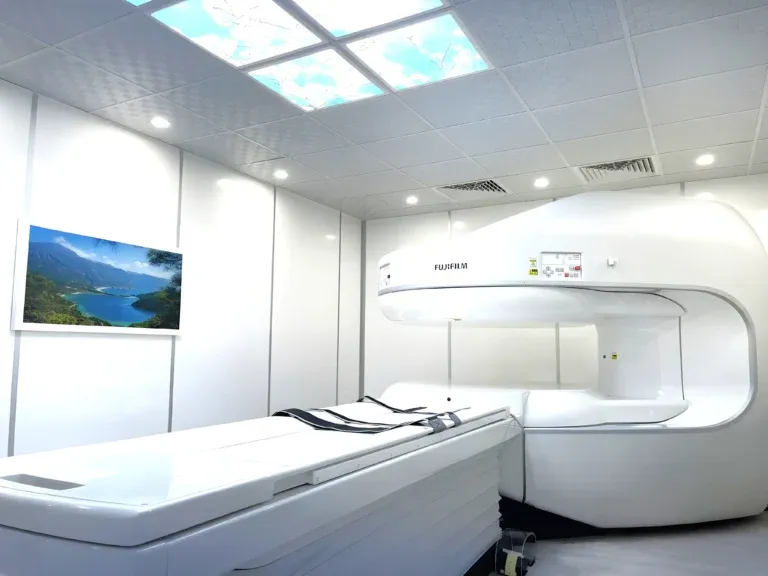
Advantis offers high-field open MRI at Walters Road. The team still needs to check the requested body region, protocol and implant conditions before confirming that location. A preference for an open scanner should be part of the booking conversation rather than a last-minute request after arrival.
If your clinician recommends medicine for anxiety, arrange the prescription, timing and transportation beforehand. Do not borrow medicine or take an extra dose on your own. Tell the center about the plan, and ask what happens if anxiety prevents completion so you understand the next steps before the scan starts.
Make the first call specific
Explain what worries you: the enclosure, the noise, lying still or not knowing how to stop. Ask the team to talk through how you will communicate with the technologist. You do not need to wait until you are in the scan room to have that conversation.
Ask about the scanner
For some patients, an open MRI setting may be worth discussing. Advantis lists open MRI at Walters Road. The team still needs to check whether your ordered examination is suitable for that scanner and what positioning it will involve.
Separate the feeling of enclosure from other concerns
Someone who finds the tunnel difficult may need a different discussion from someone whose main problem is pain, scanner noise or being unable to communicate. Write down the specific part you are worried about. Ask the team to describe the position for the requested body area and how communication works. Knowing the sequence of events may make the conversation more useful, even when the equipment itself cannot be changed.
If you need to pause or cannot complete the study
Ask in advance how to alert the technologist and what happens if you need to stop. An incomplete examination may require discussion between the imaging team and referring clinician about the next step. Avoid assuming that a few images answer the full clinical question, or that a different scan can be substituted without a revised plan. If medication is considered for another attempt, confirm who prescribes it and the associated travel arrangements.
Prepare a practical plan
Confirm the total visit time, arrange transportation if needed and save the center's number. Tell scheduling about previous difficulties completing an MRI. Agree on what will happen if you need help so you arrive with a clearer understanding of the process.
Use your previous experience to plan this visit
If an earlier scan was difficult, explain when the discomfort started and what helped or did not help. Tell the team whether you stopped before entering the room, during positioning or after scanning began. This gives them a more useful starting point than a general statement that you dislike MRI. Ask what options can actually be arranged at the proposed center.
Keep the plan realistic and specific
Open MRI may be worth discussing, but scanner suitability still needs review. Do not book an examination on the assumption that sedation, a companion in the room or a particular comfort feature will be available. Confirm the agreed arrangements and what to do if you need help during the visit. Leave time to discuss alternatives if your order cannot be completed as first planned.
Your Next-Step Checklist
- Explain the specific trigger and any previous incomplete scan.
- Ask about communication and positioning.
- Confirm whether Walters Road can perform the ordered study.
- Arrange prescribed medicine and a driver when needed.
Frequently Asked Questions
Should I wait until I arrive to mention claustrophobia?
Tell scheduling beforehand. That gives you and the team time to discuss the order, scanner suitability, comfort and any prescribing or transport arrangements.
Does anxiety mean I cannot have an MRI?
It means your concerns should be discussed and an appropriate plan considered. The team can explain the available arrangements for your examination without guaranteeing a particular experience.
Can I speak to staff once the MRI starts?
Yes, communication with the technologist is part of the examination. Ask how the intercom and attention signal work before the first images. If you feel unwell or unable to continue, alert the team. You do not need to wait silently because you believe a scan must be finished without interruption.
If sedation is discussed, can I drive afterward?
Follow the instructions from the clinician responsible for sedation, including transport and activity restrictions. Arrange the required adult escort before the appointment. The exact plan depends on the medication and level of sedation; do not assume that feeling awake immediately afterward means driving is appropriate.
General educational information. Your examination and preparation depend on your clinical needs. Follow the instructions provided for your appointment.
Further reading: NHS: MRI scans · RadiologyInfo: MRI safety · RadiologyInfo: safety anesthesia